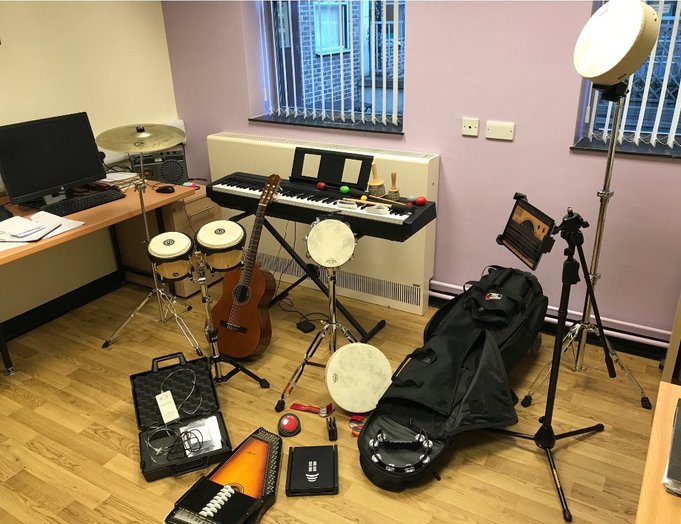
Dr Alex Street Neurologic music therapist
'/%3e%3cpath d='M2.50293 26.5356H12.2322C12.3981 26.5356 12.5497 26.4418 12.6237 26.2933L18.0527 15.4032C18.2235 15.0605 18.721 15.0871 18.8543 15.4461L24.6662 31.0933C24.7972 31.4461 25.283 31.4798 25.4615 31.1484L31.615 19.7205C31.7807 19.4127 32.2227 19.414 32.3866 19.7228L35.8796 26.3033C35.9555 26.4462 36.1041 26.5356 36.266 26.5356H47.0029' stroke='white' stroke-width='2' stroke-linecap='round'/%3e%3c/svg%3e)
' stroke-width='2' stroke-linecap='round'/%3e%3cdefs%3e%3clinearGradient id='paint0_linear_14_75' x1='-1.00001' y1='0.99998' x2='222' y2='1' gradientUnits='userSpaceOnUse'%3e%3cstop stop-color='rgba(87%2c140%2c215%2c1)'/%3e%3cstop offset='1' stop-color='rgba(255%2c255%2c255%2c1)'/%3e%3c/linearGradient%3e%3c/defs%3e%3c/svg%3e)
Neurorehabilitation and neurodevelopment for adults & children
Home-based
On rehab unit
In schools
Online
' stroke-width='2' stroke-linecap='round'/%3e%3cdefs%3e%3clinearGradient id='paint0_linear_14_73' x1='228' y1='1' x2='5.00001' y2='0.999999' gradientUnits='userSpaceOnUse'%3e%3cstop stop-color='%232c80f6'/%3e%3cstop offset='1' stop-color='rgba(255%2c255%2c255%2c1)'/%3e%3c/linearGradient%3e%3c/defs%3e%3c/svg%3e)
Attention and other cognitive training
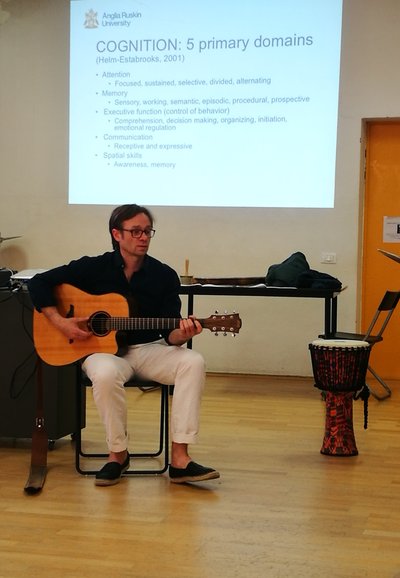
Attention is the foundation for learning with all age groups.
Beat and rhythmic pattern copying exercises train attention, executive function, self-monitoring and error correction, starting with focused and sustained attention and progressing to selective, divided and alternating.
Cognitive training is essential to enable planning and organising used for tasks around the home such as cooking and cleaning, and for navigating the outside world. These exercises help lay the foundations for transitioning into language acquisition and rehabilitation for aphasia and dyspraxia of speech.
Arm, hand and finger rehabilitation
There is a musical instrument or device for every movement and sequence, which can be spatially arranged to meet existing movement range and degree of dexterity and be adjusted as they improve. The equipment provide auditory, visual and tactile feedback and music is used that optimises the priming, timing and smoothness of movement.
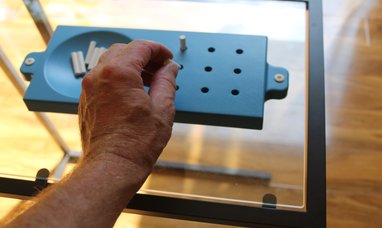
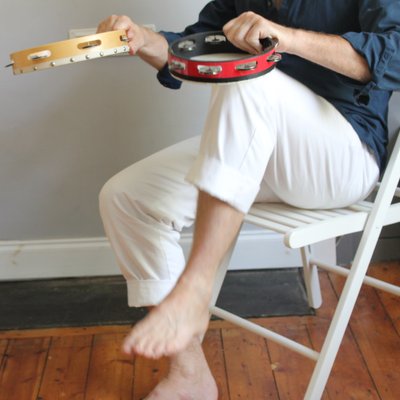
Core strength, sit-to-stand & pre-gait exercises are facilitated using a range of instruments and prepare for gait training using rhythmic auditory stimulation. These techniques use the pulse (the beat) of simple, musical compositions to cue movement and improve balance, velocity and stride length. They can be accessed by adults with neurological injury or disease and children with a range of conditions including cerebral palsy.
Walking and mobility training
specialist Music Therapist
' stroke-width='2' stroke-linecap='round'/%3e%3cdefs%3e%3clinearGradient id='paint0_linear_14_75' x1='-1.00001' y1='0.99998' x2='222' y2='1' gradientUnits='userSpaceOnUse'%3e%3cstop stop-color='%232c80f6'/%3e%3cstop offset='1' stop-color='rgba(255%2c255%2c255%2c1)'/%3e%3c/linearGradient%3e%3c/defs%3e%3c/svg%3e)
Alex Street (PhD, MTDip, BMus)
Specialist Music Therapist in Neurorehabilitation & Neurodevelopment
I am Dr Alex Street, a music therapist dedicated to personalized patient-centred care, with 20-years clinical and 10-years research experience in neurorehabilitation and education settings using music.
Billing and Insurance Information
' stroke-width='2' stroke-linecap='round'/%3e%3cdefs%3e%3clinearGradient id='paint0_linear_14_73' x1='228' y1='1' x2='5.00001' y2='0.999999' gradientUnits='userSpaceOnUse'%3e%3cstop stop-color='%23578CD7'/%3e%3cstop offset='1' stop-color='white'/%3e%3c/linearGradient%3e%3c/defs%3e%3c/svg%3e)
Have a billing or insurance query? Contact me for assistance.
Payment Methods
I accept payment via cash, credit/debit cards, and bank transfers for your convenience.
Insurance Partners
I work with case managers and insurance companies, including Irwin Mitchell, NeuroHealth Case Management, Slater and Gordon and TJB Rehabilitation.

Accreditations

PhD
2014
Doctor of philosophy awarded for Home-based neurologic music therapy for arm hemiparesis following stroke.
Read more: https://journals.sagepub.com/doi/pdf/10.1177/0269215517717060
Read more: https://www.tandfonline.com/doi/full/10.1080/08098131.2019.1606848
HCPC Registration AS05574
2004
Health and Care Professions Council ensures competence and professionalism.
BAMT Member
2003
British Association of Music Therapy membership for excellence in practice.
MATADOC
qualified (Music Therapy Assessment Tool for Awareness in Disorders of Consciousness)
Explore resources
Home exercise programs
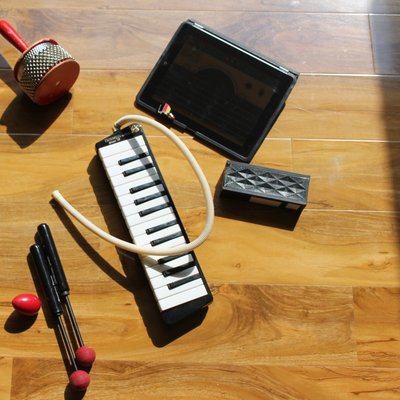
We can work together to create a weekly program of exercises, including breathing, vocal, cognitive, mobility and hand/arm exercises using tablet and touchscreen instruments
iPads adapted for finger exercises
Using apps such as Garageband and Thumbjam on iPads, it is possible to improve finger dexterity and i can help with configuring these apps. See this article for some details on exercises:
Upper limb rehabilitation in chronic stroke using neurologic music therapy: Two contrasting case studies to inform on treatment delivery and patient suitability: https://doi.org/10.1080/08098131.2019.1606848
Recovery
Tips and techniques: listening to preferred music and/or audiobooks improves mood and cognitive recovery. See:
'Measuring the effects of listening for leisure on outcome after stroke (MELLO)'
Latest news and publications
Presenting at The Sociey for Research in Rehabilitation 29 April 2024
Cicely Saunders Institute, King’s College London
Hosted by Dr Stephen Ashford
Music.ALS: Home-Based Music Therapy to Support Bulbar and Respiratory Functions of Persons with Early and Mid-Stage Amyotrophic Lateral Sclerosis / Motor Neurone Disease. By Dr Alisa Apreleva
BBC World Service: People Fixing the World featuring two participants & Dr Alex Street from the RadioMe for dementia study:
https://www.bbc.co.uk/sounds/play/p0hm9q83
listen from about 8-minutes
We are recruiting stroke survivors with arm hemiparesis who will receive 15 home-based sessions in three-weeks, with EEG data recorded before and after to show changes in the brain.
The Art and Craft of Music Therapy for Stroke Rehabilitation in a Remote North Indian Community: A Case Study
https://voices.no/index.php/voices/article/view/3724
What might an interactive music therapy service bring to the adult intensive care unit? A suggested service based on data from a scoping review
service user feedback
Did music therapy help with anything else? Movements, mood, coordination
Emma
Inpatient, acute ward
This is an amazing service that needs extending. As the first tool to (name of husband) finding his voice we were thrilled, we continue to sing! Thank you Alex for your support, your fun, relaxed manner helped in difficult times
Anna
Spouse of patient
It made exercises less boring and more interesting. Exercise time passed quickly
Satvik
Inpatient
consultation booking
Get in Touch


- Sunday
- Closed
- Monday - Thursday
- 09:00 - 19:00
- Friday
- 09:00 - 17:00
- Saturday
- Closed